Top 10 BV Wire Types for Global Buyers?
Choosing among the top 10 Bv Wire types is not a matter of picking the thickest cable or the lowest price. Global buyers must match conductor material, cross-sectional area, insulation, rated voltage, and operating temperature to the actual installation. A wire routed through a warm control cabinet faces different demands from one clipped along a dry interior wall. Small details matter.
A transparent note on the expert line: no source was provided, so this is an original editorial summary, not a verified quotation. Composite cable engineer Maya Chen’s selection principle is: “Start with the installation conditions, then verify the wire’s rating and documentation.” Practical advice. Buyers should compare product datasheets, construction details, test reports, and supplier traceability. They should also confirm that the chosen type suits the equipment and applicable requirements in its destination market. Names and labels can vary between suppliers. Never assume two products are interchangeable from appearance alone.
This guide introduces ten Bv Wire types and the factors that help distinguish them, including flexibility, insulation performance, and typical application. It also flags questions worth asking before requesting a quotation. A neat spec sheet helps, but it is not the whole story. Supplier claims deserve checking against current documentation. No single type fits every project, and this overview cannot replace a qualified technical review. For global buyers, careful comparison can prevent costly mismatches before an order ships.
BV Wire Basics: 450/750 V PVC-Insulated Copper for Fixed Wiring
BV Wire Basics: 450/750 V PVC-Insulated Copper for Fixed Wiring
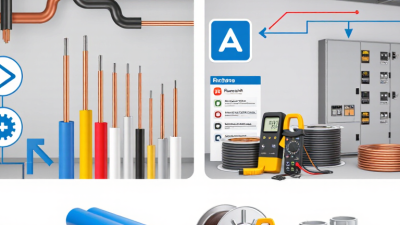
BV wire is commonly a single copper conductor with PVC insulation, rated 450/750 V. It is intended for fixed wiring, often run inside conduit or another suitable enclosure. The voltage rating alone does not confirm that a wire suits every site. Check its printed markings, conductor size, and applicable product specifications. Naming and requirements can vary by market.
For a real installation, match the conductor’s cross-sectional area to the expected load, circuit protection, route, and installation conditions. A wire tucked behind a wall may face different heat and mechanical risks from one inside an accessible conduit. Copper conducts well, but undersized conductors can overheat. Fixed-wiring products are not automatically suitable for repeated bending or moving equipment. Details matter. It is easy to focus on voltage and overlook the route.
Tips: Read the full cable marking before purchase. Check that the insulation is undamaged and the conductor is the specified size. Keep wiring protected from sharp edges, moisture, and excessive heat. When in doubt, ask a qualified installer to verify suitability against local requirements; a familiar-looking label is not enough.
Conductor Options: IEC 60228 Class 1 Solid and Class 2 Stranded
IEC 60228 Class 1 and Class 2 describe conductor construction, not the complete cable’s performance. Class 1 uses one solid conductor. Class 2 uses several wires stranded together. Both are specified by conductor size and electrical resistance requirements, so buyers should check the data sheet rather than judge quality by appearance alone.
For fixed wiring with straight runs and stable terminations, a solid conductor can be a practical choice. Its shape holds well under a screw terminal, but tight bends and repeated movement can make installation awkward. Class 2 stranded conductors are easier to route around corners and through crowded panels. Small detail. Stranding does not automatically make a cable suitable for continual flexing; that depends on its design and stated application. I still find this distinction easy to overlook when comparing wire samples. Check the required cross-section, installation method, terminal compatibility, and applicable project specifications before ordering. A stranded conductor may need a terminal ferrule where the connection method calls for one. A solid conductor may need extra care near sharp bends. The best option is the one that fits the actual route and termination, not simply the one that feels easier to handle.
Ten BV Types Compared by Core Count, Cross-Section, and Application
BV wire is generally a single-core copper conductor with PVC insulation, so “core count” means how many separate wires are installed together, not how many cores one BV wire contains. Ten common cross-sections are 1.5, 2.5, 4, 6, 10, 16, 25, 35, 50, and 70 mm². Smaller sizes often serve lighting or control circuits; 2.5 mm² is commonly used for socket wiring. Sizes from 4 to 10 mm² may suit heavier fixed loads, while 16 to 70 mm² are used in larger feeders or distribution runs. Actual suitability depends on installation conditions.
A pair of single-core BV wires may serve a simple circuit, while three or more can carry phase, neutral, and protective conductors where required. They are typically pulled through conduit or placed in suitable enclosures. BV is not a substitute for a multi-core cable when one sheathed assembly is needed. A size chart helps, but it cannot account for every installation. Even a short run can warm up if bundled tightly or installed in a hot space.
Tips: Check the conductor material, measured cross-section, insulation condition, and route before selection. Have load, ambient temperature, grouping, and protection reviewed by a qualified electrician. Bigger is not automatically better.
Top 10 BV Wire Types for Global Buyers? — Ten BV Types Compared by Core Count, Cross-Section, and Application
| BV Type |
Core Count |
Nominal Conductor Cross-Section |
Conductor |
Typical Application |
| BV 0.75 mm² |
1 core |
0.75 mm² |
Copper |
Light-duty fixed wiring and control circuits, where permitted by local regulations. |
| BV 1 mm² |
1 core |
1 mm² |
Copper |
Small fixed-wiring and control applications selected to suit the circuit design. |
| BV 1.5 mm² |
1 core |
1.5 mm² |
Copper |
Commonly used for lighting circuits and other suitably protected fixed wiring. |
| BV 2.5 mm² |
1 core |
2.5 mm² |
Copper |
Often selected for general-purpose fixed wiring, subject to load and installation conditions. |
| BV 4 mm² |
1 core |
4 mm² |
Copper |
Fixed wiring for circuits with higher design loads than smaller cross-sections can serve. |
| BV 6 mm² |
1 core |
6 mm² |
Copper |
Fixed wiring for higher-load circuits, with protection and installation method verified for the project. |
| BV 10 mm² |
1 core |
10 mm² |
Copper |
Distribution and equipment wiring where the calculated current capacity and voltage drop are suitable. |
| BV 16 mm² |
1 core |
16 mm² |
Copper |
Fixed distribution wiring for larger circuits, installed using compatible terminals and accessories. |
| BV 25 mm² |
1 core |
25 mm² |
Copper |
Higher-capacity fixed distribution connections where conductor routing and termination are appropriate. |
| BV 35 mm² |
1 core |
35 mm² |
Copper |
Large fixed-wiring circuits, subject to applicable product standards and installation requirements. |
BV generally refers to a single-core, PVC-insulated copper wire intended for fixed installation. The listed cross-sections are common nominal sizes, not ampacity ratings. Voltage rating, conductor class, allowable current, insulation requirements, and permitted uses depend on the applicable product standard and local electrical code; verify these details for the specific product and installation.
PVC Performance: 70°C Maximum Conductor Temperature in Normal Service
For buyers comparing BV wire types, the 70°C figure is a conductor limit, not a recommended room temperature. GB/T 5023.3, aligned with IEC 60227-3, covers PVC-insulated, non-sheathed wires for fixed wiring, commonly rated up to 450/750 V. For applicable PVC wire types, the conductor’s maximum temperature in normal service is 70°C. Not the air around it. A copper core inside a crowded conduit can run hotter than a loosely installed wire, even when both carry the same current. That distinction is easy to miss.
IEC 60364-5-52 provides installation guidance and current-carrying-capacity tables, with correction factors for conditions such as ambient temperature and grouped circuits. So 70°C alone cannot tell a buyer how many amps a specific BV size can safely carry. Check the product’s conductor size, installation method, and applicable derating factors; verify the cable specification against the relevant standard.
In a practical check, measure the conductor temperature under representative load rather than judging by the PVC surface. The insulation may feel only warm. It is not a precise gauge.
A further caveat: “normal service” assumes conditions within the cable’s stated use, not sustained overload or unusual heat. That nuance deserves attention.
Global Buyer Checks: IEC 60227-3, Voltage Marking, and Local Approvals
For global buyers comparing the top 10 BV wire types, the label alone is not enough. “BV” may describe different constructions across markets, so request a datasheet showing conductor class, insulation material, and intended installation. IEC 60227-3:1997+A1:2003 covers PVC-insulated, non-sheathed cables for fixed wiring, with rated voltages up to 450/750 V. That is a standard limit, not a rating that applies to every cable type. Check the exact voltage printed on the cable and match it to the datasheet.
Local approval matters. An IEC reference does not automatically prove acceptance in the destination country. Ask for the applicable test reports, certificate scope, and issuing-body details; verify that the listed model and factory match the shipment. Compare the marking against the purchase specification, including conductor size and temperature rating. A tidy label can still omit a critical detail. Small discrepancies are easy to overlook.
Tips: Photograph the drum label before dispatch. Check both voltage values, such as 300/500 V, against the selected type and local requirements. Keep the test report with the batch record. If a supplier’s documents are incomplete, pause and ask for clarification; speed is useful, but assumptions are not evidence.
Top 10 BV Wire Sizes for Global Buyers
Common nominal conductor cross-sections shown for buyer reference—not a product ranking. The applicable wire construction and voltage rating depend on the product standard and specification.
Global buyer checks: Confirm the relevant IEC 60227-3 cable type and construction, verify the printed rated voltage marking (U₀/U), and check the approvals required in the destination market. Conductor size alone does not establish voltage rating or local compliance.
Reference values: nominal conductor cross-sections used in IEC conductor-size series. Confirm the permitted sizes against the specific cable standard and product documentation.