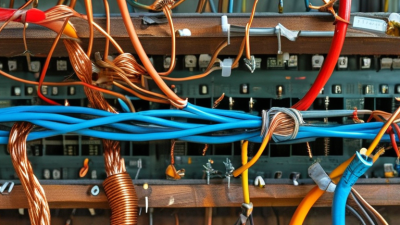
Choosing the right Bv Wire in 2026 requires more than comparing prices or copper weight. The correct choice must match the circuit, installation environment, and applicable electrical standard. A reliable decision begins with the conductor size, rated voltage, insulation temperature, and expected current load.
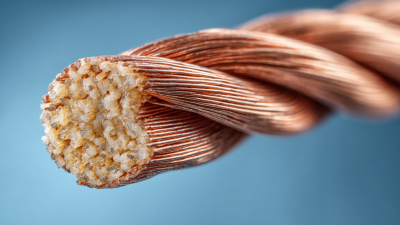
Electrical educator Mike Holt offers a useful reminder: “The code is the minimum, not the goal.” That principle matters when selecting Bv Wire. Compliance provides a baseline, but careful buyers also examine conductor purity, insulation consistency, flame performance, and production traceability. A genuine sample should feel uniform, bend without surface cracking, and show clear, durable markings along the sheath.
Consider a 2.5 mm² copper Bv Wire for a typical indoor circuit only after confirming the actual load and local requirements. The same cable may perform differently inside a crowded conduit, a warm ceiling, or a damp service area. Ambient temperature matters. Grouping matters more than many people expect.
Do not choose by diameter alone.
In 2026, buyers should request test reports, certification records, batch details, and installation guidance from established manufacturers. Standards and certification schemes can vary by market, so verification remains essential. This is where many comparisons become imperfect: product labels may look similar, while copper quality and insulation durability differ significantly.
A practical selection process balances safety, service life, installation conditions, and total cost. The cheapest Bv Wire may become expensive after overheating, replacement, or downtime. Thoughtful evaluation is slower, but it protects both the installation and the people using it.
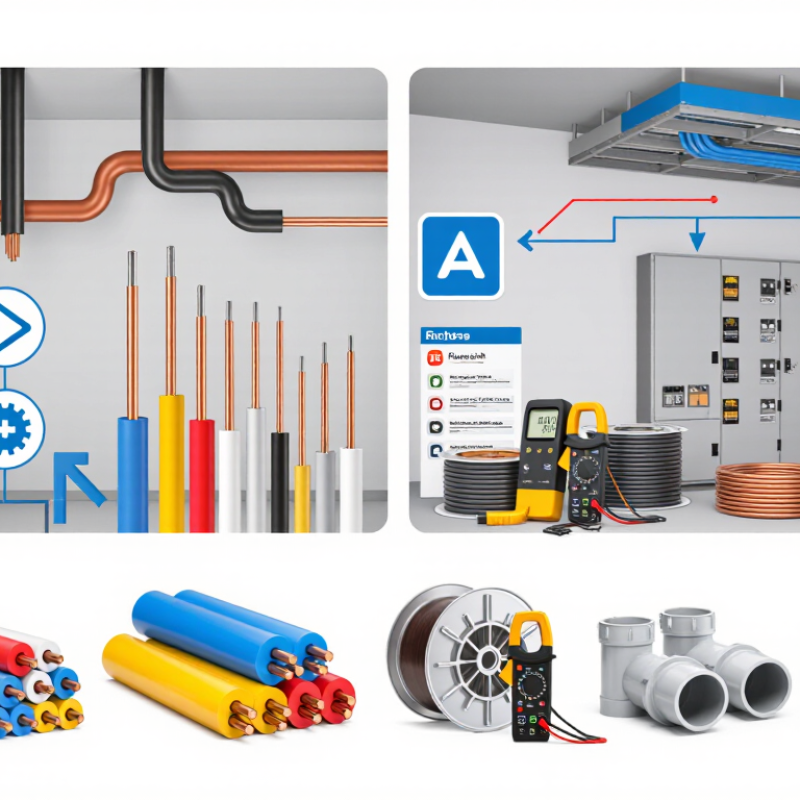
BV wire usually means a single-core copper conductor with PVC insulation, designed for fixed electrical installation. In China, the designation commonly refers to 450/750V PVC-insulated wire under GB/T 5023.3. IEC 60227-3 describes the comparable category as non-sheathed cable for fixed wiring. It is not a flexible appliance cord.
You will find BV wire inside residential walls, conduits, distribution boxes, lighting circuits, socket circuits, and small commercial control panels. The copper core carries current, while the PVC layer prevents contact with nearby conductors and building materials. It should not be treated as a universal outdoor solution. Moisture, sunlight, movement, and direct burial may require different cable construction.
Copper demand keeps this choice relevant. The International Copper Study Group’s 2024 market outlook estimated global refined copper usage at about 26.2 million tonnes in 2024. More building electrification will increase wiring pressure, but demand alone does not determine the correct BV wire. I would not choose by diameter alone. Check conductor cross-section, installation method, ambient temperature, voltage drop, conduit space, and terminal compatibility. A 2.5 mm² wire may suit a socket circuit in one installation, yet perform poorly in a hot, crowded conduit. Small details matter. Local certification also deserves careful verification, because product markings can look convincing while hiding an unsuitable application.
| Selection Dimension | Typical BV Wire Specification | What It Means | Recommended Use or Selection Guidance |
|---|---|---|---|
| BV Wire Definition and Construction | |||
| Wire designation | BV | Single-core copper conductor with PVC insulation, intended mainly for fixed electrical wiring. | Use BV wire for permanent wiring rather than applications requiring frequent movement, flexing, or mechanical dragging. |
| Conductor material | Annealed copper | Copper provides good electrical conductivity, reliable termination, and relatively low electrical resistance. | Choose copper BV wire where stable connections, compact wiring, and dependable conductivity are required. |
| Conductor construction | Usually solid or stranded, depending on cross-sectional area and applicable standard | Solid conductors are commonly used in fixed building wiring. Stranded conductors can be easier to route in some larger sizes. | Confirm conductor class and construction before installation, especially when the wire must pass through narrow conduits or connect to terminals. |
| Insulation | PVC insulation | PVC provides electrical insulation and basic protection against abrasion, moisture, and ordinary indoor installation conditions. | Use only within the temperature, voltage, chemical, and environmental limits stated by the applicable product standard. |
| Electrical Ratings and Technical Parameters | |||
| Common rated voltage | 450/750 V for common fixed-installation versions; 300/500 V for some lighter-duty versions | The first value is the conductor-to-earth voltage rating and the second is the conductor-to-conductor voltage rating. | Match the wire rating to the circuit design. Do not use a lower-rated wire on a circuit requiring a higher voltage rating. |
| Maximum conductor operating temperature | Typically 70°C for standard PVC-insulated wire | The continuous conductor temperature must remain within the insulation system’s specified limit. | Apply correction factors for ambient temperature, grouping, conduit fill, and installation method. Short-circuit limits are higher and must be checked separately. |
| Typical cross-sectional areas | 1.5, 2.5, 4, 6, 10, 16, 25, 35, 50 mm² | Cross-sectional area affects permissible current, voltage drop, mechanical strength, and overall cable cost. | Select the size by calculating load current, voltage drop, fault protection, installation conditions, and local code requirements. |
| Reference current-carrying capacity |
1.5 mm²: approximately 14.5 A 2.5 mm²: approximately 19.5 A 4 mm²: approximately 26 A 6 mm²: approximately 34 A 10 mm²: approximately 46 A |
Indicative values for copper conductors with PVC insulation under a typical 70°C reference condition. | These values are not universal ampacity ratings. Final selection must follow the applicable electrical code and the actual installation method. |
| Voltage-drop consideration | Resistance decreases as conductor cross-sectional area increases | A longer circuit or a higher load can cause excessive voltage drop even when the thermal current rating is adequate. | Increase the conductor size when the circuit is long, the load is sensitive to voltage variation, or the calculated voltage drop exceeds the permitted limit. |
| Color identification | Common colors include brown, black, grey, blue, and green/yellow | Color coding helps identify line, neutral, protective conductor, and control circuits. | Follow the wiring color rules of the country or project specification. Green/yellow should be reserved for the protective conductor. |
| Where BV Wire Is Used | |||
| Residential buildings | Lighting circuits, socket circuits, and fixed appliance circuits | BV wire is commonly installed inside conduits, walls, ceilings, distribution boxes, and electrical panels. | Use the correct conductor size and protective device for each circuit. Keep power, communication, and control wiring separated where required. |
| Commercial buildings | Branch circuits, lighting systems, control wiring, and distribution-board connections | It is suitable for fixed wiring in offices, shops, schools, and similar premises when environmental conditions are normal. | Check fire, smoke, emergency-power, and public-occupancy requirements before specifying standard PVC insulation. |
| Industrial facilities | Fixed internal wiring, control cabinets, equipment connections, and cable trunking | BV wire can be used where the wiring is protected and is not exposed to continuous movement, severe vibration, oil, or extreme heat. | Consider heat-resistant, oil-resistant, flexible, armored, or low-smoke alternatives when the operating environment requires them. |
| Conduit and trunking installations | Single conductors pulled through rigid or flexible conduit and placed in cable trunking | The single-core format allows circuits to be arranged by function and routed through protected pathways. | Observe conduit fill limits, bending radius, pulling tension, grouping factors, and accessibility requirements. |
| How to Choose the Right BV Wire | |||
| 1. Calculate design current | Based on load power, system voltage, phase arrangement, and power factor | Design current is the starting point for conductor and protective-device selection. | For single-phase loads, use the applicable single-phase calculation. For three-phase loads, use the applicable three-phase calculation and verify the neutral current. |
| 2. Check installation conditions | Ambient temperature, number of loaded conductors, conduit method, grouping, and thermal insulation | Installation conditions affect heat dissipation and therefore reduce or increase the allowable current. | Apply all required correction and grouping factors instead of relying only on a nominal ampacity table. |
| 3. Verify voltage drop | Consider circuit length, load current, conductor resistance, and allowable voltage-drop limit | Voltage drop can reduce equipment performance and cause lighting or motor problems. | Increase the conductor cross-sectional area if the calculated voltage drop is above the project or code limit. |
| 4. Coordinate protection | Breaker or fuse rating must protect the conductor | The protective device must interrupt fault current and prevent the conductor from overheating. | Do not select a larger breaker merely because a larger load is expected; first verify conductor capacity and circuit conditions. |
| 5. Confirm environmental suitability | Normal indoor conditions versus moisture, sunlight, chemicals, oil, heat, vibration, or outdoor exposure | Standard PVC-insulated BV wire is not automatically suitable for every environment. | Choose a different insulation or cable construction when the application requires UV resistance, water resistance, chemical resistance, enhanced fire performance, or flexibility. |
| 6. Check compliance and installation quality | Applicable product standard, conductor marking, insulation condition, terminal compatibility, and test results | Compliance and workmanship are essential for electrical safety and long-term reliability. | Verify the required national or international standard, use correctly rated terminals, avoid damaged insulation, and test continuity, insulation resistance, polarity, and protective-conductor continuity before energizing. |
| Important Limitations | |||
| Not intended for continuous flexing | Fixed-installation wire | Repeated bending can damage the conductor or insulation and reduce service life. | Use a purpose-designed flexible cable for moving equipment, drag chains, portable tools, or regularly repositioned machinery. |
| Not automatically suitable for direct burial or exposed outdoor use | Requires environmental protection | Moisture, sunlight, soil chemicals, and mechanical impact can exceed the capability of ordinary PVC-insulated wire. | Install inside an approved protective system or select a cable specifically rated for the exposure. |
| Final sizing responsibility | Project-specific engineering decision | Current capacity depends on the complete circuit, not only on the printed wire size. | Always confirm the final selection against the applicable electrical code, local regulations, installation method, and equipment requirements. |