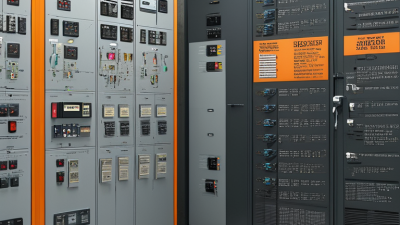
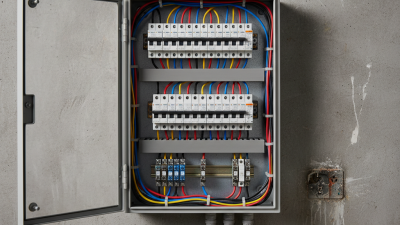
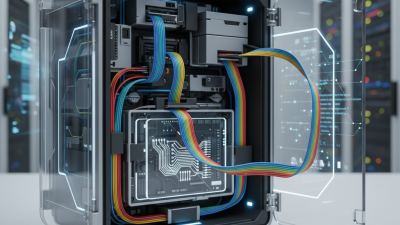
A Distribution Box is the practical meeting point between incoming power and the circuits that serve rooms, machines, or equipment. Inside, breakers or fuses help protect individual circuits, while busbars and terminals route power. Open the cover, and the layout becomes tangible: labeled switches, insulated conductors, and a metal or plastic enclosure. Its design affects safety, maintenance, and how easily a system can expand.
The International Energy Agency’s Electricity 2024 report projects global electricity demand will grow by an average of 3.4% annually from 2024 to 2026. More demand makes reliable low-voltage distribution increasingly important, though growth alone does not determine which box a building needs. IEA Executive Director Fatih Birol described the broader shift plainly: “The Age of Electricity is here.” That observation is not a product specification, but it helps explain why distribution equipment deserves careful attention.
This guide examines common types, including main distribution boxes, sub-distribution boxes, and specialized units for particular environments. It also considers capacity, circuit protection, enclosure ratings, and installation context. Standards such as IEC 61439 address low-voltage switchgear and controlgear assemblies; selecting a suitable box still requires checking the applicable product requirements and local conditions. Names can vary between suppliers. That can be confusing. A box that looks adequate on paper may not suit a damp workshop, a crowded panel space, or future load changes. The useful question is not simply which type is cheapest, but which design fits the actual circuits and operating environment.
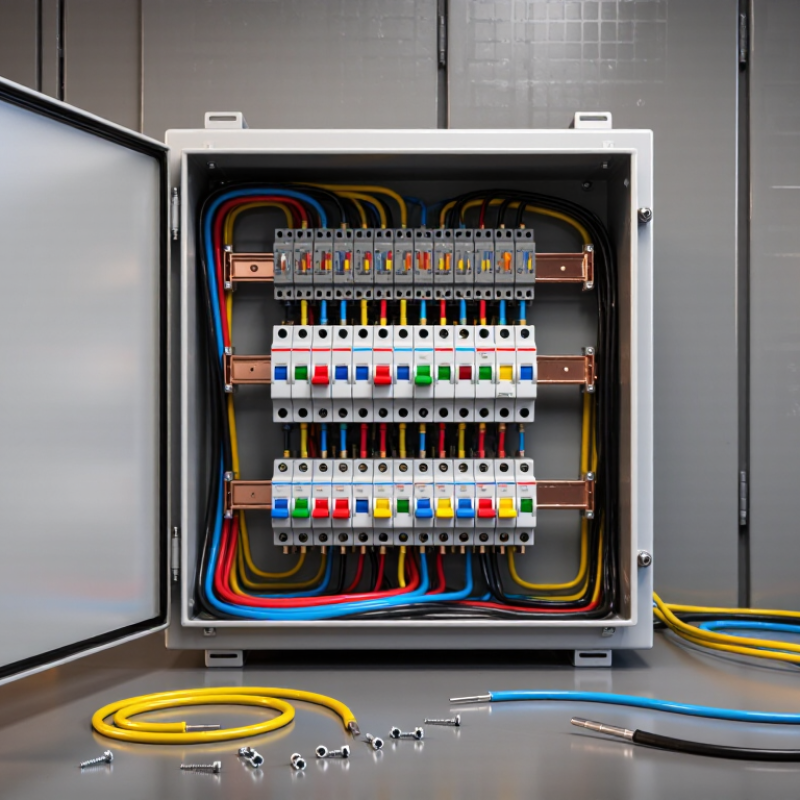
A distribution box is an enclosure that receives electrical power and divides it into smaller circuits. Inside, busbars carry current, while circuit breakers or fuses protect individual outgoing circuits from overloads and faults. A technician may see separate circuits for lighting, outlets, and fixed equipment, each identified on a directory. The box helps organize and isolate circuits; it does not generate electricity or replace the building’s wiring. Names vary by region, and “panelboard” or “consumer unit” may describe related equipment.
The International Energy Agency’s Electricity 2024 report projects global electricity demand growth of about 3.4% annually from 2024 to 2026. That wider demand makes reliable circuit distribution increasingly important, though the forecast does not predict how many boxes any one building needs. Capacity depends on the supply, expected loads, protective-device ratings, and installation conditions. A crowded enclosure can make inspection and future changes harder. Small detail, real consequence.
Tips: Check that circuit labels match the rooms and equipment they serve. Keep the enclosure accessible and dry. Never remove its cover or work inside it unless qualified; a switch being off does not guarantee every part is de-energized. A neat label list is useful, but it should be verified against the actual wiring.
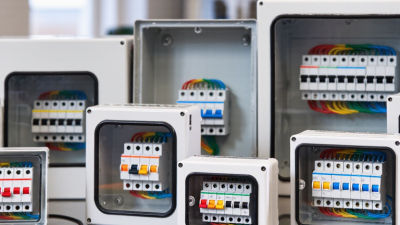
A distribution box receives electrical power from an incoming supply and directs it to separate circuits. Inside, the main switch can disconnect power to the box. Conductors then carry current to busbars, which feed individual circuit breakers. Each breaker serves a particular circuit, such as room lighting or kitchen outlets. The path is orderly, though the wiring can look crowded.
When a circuit is operating normally, current travels through its breaker and out to connected equipment. The return path usually runs through a neutral conductor. A protective earth conductor provides a path for fault current, helping protective devices operate. That matters. If a circuit draws more current than its breaker allows, the breaker trips and interrupts the supply. A short circuit can also cause it to trip quickly. Still, a breaker does not prevent every electric shock, and a box’s internal arrangement varies with its design and supply. It is easy to assume the labels tell the whole story; they may not. Correct ratings, clear circuit identification, and safe installation all matter. Work inside an energized distribution box can be hazardous, so inspection or repair should be handled by a qualified electrician.
| Distribution Box Type | Typical Application | How It Distributes Power | Common Components | Key Selection Considerations |
|---|---|---|---|---|
| Main Distribution Board | The main electrical distribution point in a building or facility. | Receives power from the service or transformer and feeds major circuits or downstream distribution boards through busbars and protective devices. | Main isolator or circuit breaker, busbars, outgoing circuit breakers, and metering or surge protection where specified. | Supply characteristics, load demand, prospective fault current, available space, and applicable electrical codes. |
| Sub-Distribution Board | A separate floor, building area, workshop, or group of loads served from a main board. | Takes a feeder from an upstream board and divides it into local branch circuits or smaller feeders. | Incoming isolator or breaker, busbars, outgoing breakers, and residual-current protection where required. | Feeder capacity, voltage drop, coordination with upstream protection, and the number and type of local circuits. |
| Residential Consumer Unit | Homes and other small premises with individual lighting, socket, and appliance circuits. | Distributes the incoming supply to final circuits, with each circuit protected against relevant overloads and short circuits. | Main switch, miniature circuit breakers, and residual-current devices or combined overcurrent and residual-current devices, as required by local rules. | Circuit count, protective-device ratings, earthing arrangement, and required residual-current and surge protection. |
| Industrial Distribution Panel | Factories, commercial facilities, and sites with larger or specialist electrical loads. | Routes power to equipment circuits, machinery panels, or other boards; some installations include separate motor-control equipment. | Circuit breakers, busbars, isolators, metering, and control or monitoring components when specified. | Load profile, fault level, environmental conditions, enclosure access, and coordination with connected equipment. |
| Outdoor or Weather-Resistant Distribution Box | Outdoor equipment, site services, and locations exposed to weather or dust. | Performs the same circuit-splitting function as an indoor board while its enclosure helps protect electrical components from the specified surroundings. | Enclosed busbars, circuit breakers, cable entries, seals, and a lockable cover where needed. | Select an enclosure protection rating and materials suited to moisture, dust, corrosion, temperature, and installation conditions. |
| Temporary Distribution Box | Construction sites, events, maintenance work, and other temporary installations. | Takes power from a temporary supply or generator and provides protected outlets or feeder connections for temporary loads. | Incoming isolator, circuit protection, residual-current protection where required, and socket outlets or feeder terminals. | Site conditions, supply capacity, outlet types, mechanical protection, and applicable temporary-installation rules. |
A distribution box routes incoming electrical power to separate circuits in a building. Inside, insulated busbars carry current between the incoming supply and protective devices. Circuit breakers or fuses disconnect a circuit when current exceeds its safe limit. Their ratings must match the wiring and expected load; a larger breaker is not automatically better. The exact layout varies by system.
Neutral and earth bars provide connection points for conductors, but they serve different functions. Terminals hold wires securely, while the enclosure shields live parts from accidental contact and dust. Some boxes also contain residual-current protection, which can disconnect power when leakage is detected. Labels identify each circuit, such as “kitchen sockets” or “lighting.” Even a tidy box can be confusing if labels are outdated. That matters.
Tips: Check labels against the actual circuits, and look for signs of heat, such as discoloration near terminals. Never remove the cover or touch internal parts while energized. A trained electrician can inspect loose connections, damaged insulation, or unsuitable protective devices. Small details are easy to miss.
Common distribution boxes are best understood by their role and location. A main distribution board receives power from the service connection and feeds major circuits throughout a building. Sub-distribution boards serve a floor, workshop, or detached structure, shortening cable runs and grouping local circuits. In homes, these are often called consumer units or breaker panels; terminology varies by region. The labels can be confusing, so check the circuit schedule and installation drawings rather than relying on the name alone.
Other common types include lighting and power distribution boxes, which separate circuits for lamps, sockets, and fixed equipment. Outdoor enclosures use sealed construction to limit moisture and dust ingress; indoor boxes are generally selected for cleaner, controlled spaces. Industrial installations may use modular assemblies with busbars and protective devices for higher circuit density. Keep it practical. Enclosure rating, fault level, and available space matter more than appearance.
NFPA’s Home Electrical Fires report estimated that electrical distribution or lighting equipment was involved in about 34,000 U.S. home fires annually from 2012 to 2016. This figure covers equipment categories, not distribution boxes alone, but it underscores the value of suitable protection and sound installation. A box that fits today may leave too little room for later circuits; that trade-off deserves review during design.
Common distribution boxes include indoor and outdoor enclosures. Their IP rating describes protection against solid objects and water; the required rating depends on the installation environment.
The first IP digit indicates protection against access and solid objects; the second indicates protection against water. These digits are separate classifications, not a single performance score. Check local requirements and product specifications when selecting a distribution box.
A distribution box divides incoming electrical power into protected circuits. Its form depends on where power enters and where it must go. A main board serves a building or floor; a sub-distribution box feeds a smaller zone, such as a workshop or apartment. Consumer units are common in homes, while industrial panels may include room for larger protective devices and heavier cables. Outdoor boxes need enclosures suited to rain, dust, and temperature changes.
Small box. Big consequences.
Installation changes the choice. A flush-mounted box sits inside a wall cavity, while a surface-mounted unit remains accessible on a wall. Installers must consider circuit count, cable entry, heat, maintenance access, and the enclosure’s ingress protection rating under IEC 60529.
The International Energy Agency’s Electricity 2024 report forecasts global electricity demand growth averaging 3.4% annually from 2024 to 2026. That trend makes spare capacity worth discussing during planning, especially where equipment may be added later.
But future-proofing is not simply buying the largest box: available space, compatible devices, and heat dissipation still matter. A neat installation can hide a poor choice if circuits are hard to identify or reach.