Leave Your Message

10 Best Distribution Boxes for Global Buyers?

Choosing among the 10 Best Distribution Boxes for Global Buyers requires more than comparing prices or polished product photos. A reliable Distribution Box must handle the expected voltage, current, cable size, and installation environment. Its enclosure should resist dust, moisture, impact, and heat. Clear terminal markings matter when technicians work quickly inside a crowded cabinet.

UL electrical safety expert John Drengenberg has emphasized, “Safety must be built into the product, not inspected into it.” That principle remains practical for buyers. Look for traceable test reports, consistent labeling, dependable circuit protection, and documented quality controls. Check whether the manufacturer explains ingress protection, temperature limits, grounding methods, and available replacement parts. Details matter.

Real installations are rarely perfect.

A box may face coastal salt, warehouse dust, freezing transport, or intense sunlight. Buyers should ask how the product performs there, not only in a showroom. Supplier experience also deserves attention. Can the company provide drawings, samples, inspection records, and responsive technical support? Can it maintain the same specifications across repeat orders?

Some evaluations still miss the human factor. A well-rated box can become unsafe when terminals are cramped, covers are awkward, or instructions are unclear. I have found that installation time often reveals weaknesses hidden by a specification sheet. Price remains important, but the cheapest option may create higher maintenance costs later. No ranking can replace a site assessment, independent verification, and careful review of local installation requirements.

10 Best Distribution Boxes for Global Buyers?

Distribution Boxes: Definition, Components, and Main Applications

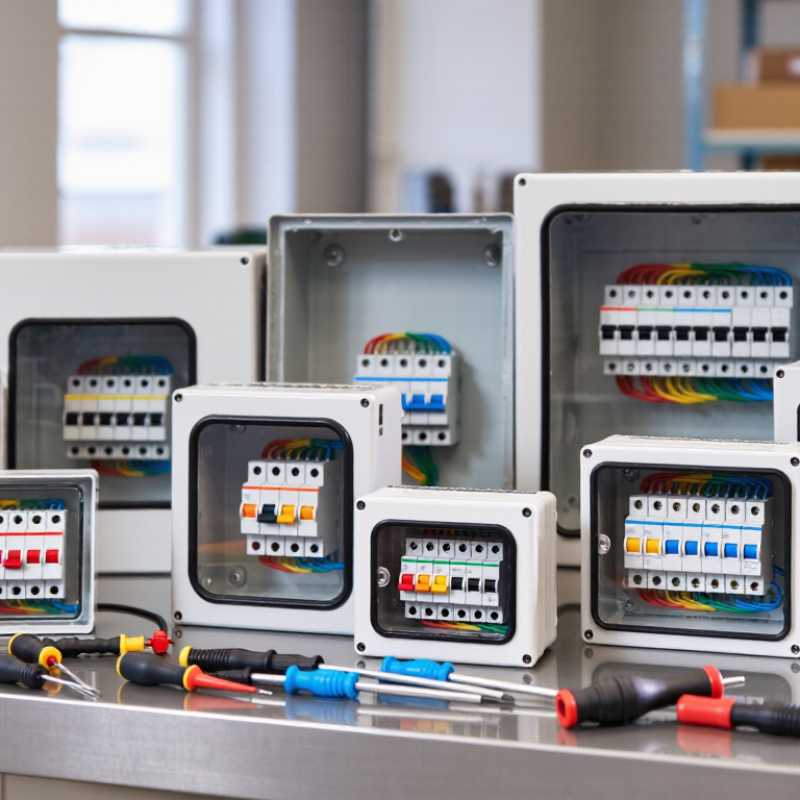
A distribution box is an enclosure that receives electrical power and divides it into controlled outgoing circuits. It helps organize wiring, isolate faults, and protect people from exposed live parts. In a real installation, it may sit near a building entrance, inside a factory room, or beside outdoor equipment. Clear labeling matters. Confusing labels can delay maintenance and create serious risks.

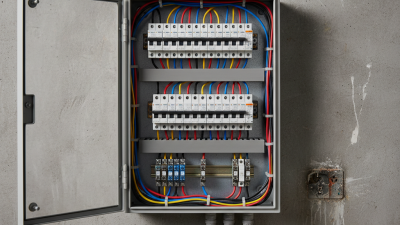
Typical components include circuit breakers, busbars, neutral bars, earth bars, terminal blocks, cable glands, and DIN rails. The enclosure may use coated steel, ABS plastic, or other impact-resistant materials. Its IP rating indicates protection against dust and water. However, an IP rating alone does not guarantee safety. Internal spacing, heat control, terminal quality, and correct cable sizing also require attention. A larger box is not automatically safer.

Distribution boxes support homes, offices, workshops, commercial buildings, machinery, and renewable-energy systems. Global buyers should check rated voltage, current capacity, frequency, temperature range, mounting style, and installation environment. Outdoor projects may need UV resistance and sealed cable entries. Industrial sites often need stronger housings and easier inspection access. Local electrical requirements still determine acceptable construction and testing. Some product descriptions sound impressive but omit heat-rise data or fault ratings. That omission deserves careful questioning. During selection, compare drawings, test documents, spare space, and maintenance access rather than relying on appearance alone.

Distribution Boxes: Definition, Components, and Main Applications

A distribution box is an enclosure that receives electrical power and distributes it safely to multiple circuits. The chart compares common DIN-rail module capacities used in residential, commercial, and light industrial distribution boxes.

Typical components include a main isolator or circuit breaker, miniature circuit breakers, residual-current protection, neutral and earth terminals, DIN rails, cable entries, and an insulated enclosure. Smaller boxes suit apartments and single-room installations, while higher-capacity formats are commonly selected for offices, workshops, retail spaces, and industrial control panels. One standard DIN module is approximately 17.5 mm wide, so actual enclosure dimensions and usable capacity can vary by design.

How to Evaluate Distribution Boxes for Global Purchasing

10 Best Distribution Boxes for Global Buyers

How to Evaluate Distribution Boxes for Global Purchasing

For global buyers, a distribution box should match the installation, climate, and electrical load. Start with rated voltage, current capacity, frequency, and circuit quantity. Check the enclosure material, impact resistance, corrosion protection, and ingress rating. A dusty workshop needs different protection than a clean indoor cabinet. Small details matter.

Ask for evidence. Request technical drawings, wiring diagrams, material specifications, and independent test reports. Confirm that stated certifications apply to the complete assembly, not only individual components. Standards and approval requirements differ between markets, so verify the documents with a qualified local electrician or inspection body. Do not rely on a product page alone. Clear documentation reduces installation errors and customs delays.

Practical evaluation should include a sample inspection before volume purchasing. Open the box and examine terminal spacing, labeling, cable entries, grounding points, and heat management. Poor ventilation can shorten component life, even when the rated current looks acceptable. Review factory quality controls, batch traceability, packaging strength, and replacement-part support. A supplier audit can reveal inconsistent crimping or weak hinges that photographs hide. No checklist is perfect. Buyers should record failures, compare them with field conditions, and revise the specification before placing a larger order.

The 10 Best Distribution Boxes for Different Use Cases

10 Best Distribution Boxes for Different Use Cases

Global buyers need distribution boxes that match real working conditions, not attractive specifications alone. The IEA Electricity 2024 report expects global electricity demand to grow by about 4% annually through 2026. That growth increases pressure on temporary, industrial, and renewable power systems.

For residential renovation, choose compact boxes with clear labeling, residual-current protection, and easy DIN-rail access.

Construction sites need impact-resistant, portable units with sealed cable entries and visible emergency isolation.

Outdoor events require weather-resistant enclosures and protected sockets.

Industrial machinery benefits from metal boxes, higher short-circuit ratings, and spare circuits for expansion.

Solar installations need DC-rated switching and suitable surge protection.

Battery systems demand careful thermal management and separation between power paths.

Data rooms favor low-heat designs, organized cable routing, and reliable monitoring.

Agricultural facilities need protection against dust, moisture, and corrosive chemicals.

Marine or coastal projects require stronger corrosion resistance.

Emergency power systems need fast identification and simple maintenance.

IEC 61439 provides a useful framework for low-voltage assembly design, while IEC 60529 defines IP protection ratings. These standards improve comparison, but certification alone is not enough. Ask for temperature-rise tests, material details, wiring diagrams, and routine inspection records. Check the actual enclosure rating after cable glands are installed. That detail is often missed. A box rated IP65 may perform differently after poor field assembly.

My practical view is cautious: buyers should leave spare capacity, because “exactly enough” becomes expensive during the next upgrade.

International Standards, Certifications, and Compatibility Requirements

10 Best Distribution Boxes for Global Buyers?

International Standards, Certifications, and Compatibility Requirements

A strong distribution box begins with the correct standard, not attractive packaging. IEC 60670-1 covers enclosures for electrical accessories, while IEC 61439 addresses low-voltage assemblies. These standards examine insulation, temperature rise, mechanical strength, and fault performance. IEC 60529 defines IP protection ratings, such as IP65 for dust protection and water jets. However, an IP rating can change after drilling or installing an unsuitable cable gland.

Global demand makes compatibility more difficult. The International Energy Agency’s Electricity 2024 report expects worldwide electricity demand to grow by an average 3.3% annually from 2024 to 2026. More installations mean more cross-border procurement, but voltage, frequency, earthing systems, and terminal sizes still vary by market. Buyers should check rated voltage, current, short-circuit withstand capacity, operating temperature, and cable-entry dimensions. A box designed for 230 V may not suit a 120 V installation without a complete system review.

Certification documents need careful reading. CE marking is generally a manufacturer’s conformity declaration, not always independent product certification. ISO Survey 2023 recorded more than 1.26 million ISO 9001 certificates worldwide, yet quality management certification does not prove electrical safety. Request test reports, conformity declarations, material specifications, and traceable production records. Field inspections often reveal small issues, such as loose gland seals or unreadable labels. These details seem minor. They are not. A practical selection process should also allow for local inspection rules, replacement parts, and imperfect installation conditions.

10 Best Distribution Boxes for Global Buyers? - International Standards, Certifications, and Compatibility Requirements

Selection guidance is based on commonly used international standards. Final conformity requirements depend on the destination country, installation environment, rated values, and local electrical regulations.
No. Distribution Box Type Typical Application Typical Enclosure Material Typical Protection Level Common Electrical Range Relevant International Standards Certification or Compliance Evidence Compatibility Requirements Global Buyer Considerations
1 Weatherproof Polycarbonate Distribution Box Outdoor branch circuits, garden equipment, pumps, lighting, and small industrial installations. UV-stabilized polycarbonate or other self-extinguishing insulating plastic. Commonly IP65 or IP66; impact rating may be IK08 or higher depending on construction. Usually low-voltage AC circuits up to 400 V; current rating depends on the installed devices. IEC 60529 for IP rating; IEC 62262 for IK rating; IEC 60670-1 for enclosure requirements; IEC 61439-3 when configured as a distribution assembly. Test reports for IP and impact protection, material flammability data, and a conformity declaration where required by the market. DIN-rail width, terminal size, cable-entry method, conductor cross-section, and available heat dissipation. Confirm UV resistance, gasket performance, metric or imperial cable glands, and the local requirements for outdoor installations.
2 Fiberglass-Reinforced Polyester Distribution Box Utility infrastructure, railways, water treatment, chemical processing, and harsh outdoor environments. Glass-fiber-reinforced polyester, commonly called GRP or fiberglass-reinforced plastic. Often IP65 to IP66, with strong resistance to corrosion and weathering. Low-voltage AC or DC distribution; exact voltage and current are determined by the assembly design. IEC 60529; IEC 62262; IEC 60670-1; IEC 61439 series where the box contains a verified low-voltage assembly. Material performance documentation, enclosure test reports, temperature-rise assessment, and assembly verification records. Non-metallic enclosure may require compatible threaded inserts, gland plates, earthing arrangements, and screened-cable accessories. Useful where corrosion resistance is more important than metallic shielding; check mechanical mounting and fire-performance requirements.
3 Powder-Coated Steel Wall-Mounted Distribution Board Commercial buildings, workshops, factories, warehouses, and indoor sub-distribution systems. Galvanized or cold-rolled steel with an insulating powder-coated finish. Typically IP31 to IP55, depending on door, gland plate, and installation arrangement. Commonly up to 400 V AC and from several dozen amperes to several hundred amperes. IEC 61439-1 and IEC 61439-2 or IEC 61439-3; IEC 60529; IEC 62262 where impact protection is specified. Design verification, routine verification, short-circuit withstand data, temperature-rise verification, and wiring documentation. Busbar system, breaker mounting pattern, neutral and protective conductor arrangement, phase spacing, and cable bending radius. Confirm whether the buyer needs a bare enclosure or a fully assembled and tested distribution board.
4 Stainless-Steel Hygienic Distribution Box Food processing, pharmaceutical production, marine areas, coastal facilities, and washdown zones. Stainless steel, commonly grades selected for corrosion resistance and cleaning conditions. Often IP66 or IP69 when high-pressure washdown protection is required and correctly installed. Usually low-voltage AC distribution up to 400 V; current capacity depends on internal components and thermal design. IEC 60529; IEC 60670-1; IEC 61439 where applicable; hygienic design requirements may also be imposed by the end-user industry. IP test evidence, corrosion-resistance information, material declarations, and assembly verification documentation. Sealed hinges, hygienic cable glands, sloped surfaces, compatible seals, and correct equipotential bonding. Check cleaning chemicals, salt exposure, surface finish, condensation control, and whether the enclosure has internal drainage provisions.
5 Modular Residential Consumer Unit Homes, apartments, small offices, and other light-commercial final distribution applications. Insulating thermoplastic, steel, or a hybrid enclosure with a modular equipment rail. Commonly IP20 to IP40 indoors; higher protection is possible with an appropriate sealed enclosure. Typically single-phase or three-phase systems up to 230/400 V AC. IEC 61439-3; IEC 60670-1; IEC 60898-1 for household-type circuit-breakers; IEC 61008-1 and IEC 61009-1 for residual-current devices. Assembly verification, component conformity documents, circuit identification, and product marking required by the destination market. Module pitch, busbar compatibility, neutral arrangement, residual-current protection, and local conductor colors and labeling. Do not assume that circuit-breakers or busbars from different systems are interchangeable; verify dimensions and approvals.
6 Temporary Construction Distribution Box Construction sites, events, temporary facilities, maintenance work, and mobile power distribution. Impact-resistant insulating plastic, rubber, or metal with reinforced cable outlets. Commonly IP44 to IP67, depending on indoor, outdoor, or wet-location use. Often 230/400 V AC systems with socket outlets, residual-current protection, and overcurrent protection. IEC 61439-4 for assemblies for construction sites; IEC 60529; IEC 60309 for industrial plugs and socket-outlets. Routine verification, residual-current protection test results, socket-outlet conformity, and mechanical-impact test evidence. Socket configuration, plug standard, phase arrangement, cable type, lifting or mounting method, and emergency isolation requirements. Select the plug and socket system used in the destination country; temporary installations may have additional national safety rules.
7 Flush-Mounted Indoor Distribution Box Residential and commercial interiors where a concealed, space-efficient installation is preferred. Insulating plastic, powder-coated steel, or a combination of enclosure and trim frame. Usually IP20 to IP40 for dry indoor locations. Typically up to 230/400 V AC, with current capacity based on the installed protective devices. IEC 60670-1; IEC 61439-3; applicable national installation rules for clearances, accessibility, and fire safety. Enclosure test data, assembly verification, material flammability information, and installation instructions. Wall cavity depth, trim dimensions, modular space, cable entry direction, and compatibility with the selected protective devices. Allow spare modules for future circuits and verify that the mounting method suits the wall construction.
8 Hazardous-Area Certified Distribution Box Locations where flammable gas, vapor, mist, or combustible dust may be present. Cast aluminum, stainless steel, or specially engineered reinforced enclosure systems. Often IP65 or higher, but the protection concept and installation method are more critical than IP rating alone. Low-voltage circuits; voltage, power, temperature class, and fault rating must match the hazardous-area design. IEC 60079-0 and the applicable protection-type standards such as IEC 60079-1, IEC 60079-7, or IEC 60079-31. Valid IECEx or applicable regional hazardous-location certification, certificate schedule, marking, and installation instructions. Hazardous-zone classification, gas or dust group, temperature class, cable-gland certification, and earthing continuity. Never substitute a standard weatherproof box for a certified hazardous-area enclosure; verify the complete installed system.
9 Photovoltaic DC Combiner Box Combining multiple solar photovoltaic strings before connection to an inverter or DC distribution system. UV-resistant polycarbonate, thermoplastic, GRP, or coated metal. Commonly IP65 to IP66 for outdoor photovoltaic installations. Usually 600 V, 1,000 V, or 1,500 V DC systems; string current and short-circuit ratings must be verified. IEC 61439-2; IEC 62548 for photovoltaic array design; IEC 61643-31 for DC surge protective devices; IEC 60529. DC voltage and current test data, protective-device ratings, enclosure IP evidence, wiring diagram, and conformity documentation. PV connector type, fuse voltage rating, polarity, reverse-current protection, SPD configuration, cable size, and inverter input limits. DC arcing and isolation risks require correct components; confirm maximum system voltage at the lowest expected temperature.
10 Electric Vehicle Charging Distribution Box Dedicated supply and protection for AC electric-vehicle charging equipment in homes, workplaces, parking areas, and public facilities. UV-resistant insulating plastic, coated steel, or stainless steel for outdoor installations. Commonly IP54 to IP66, depending on location and charging-equipment design. Single-phase 230 V or three-phase 400 V AC systems; charging current must match the circuit and protective devices. IEC 61439-3; IEC 61851-1 for conductive charging systems; IEC 60364-7-722 for EV supply installations; IEC 60529. RCD or equivalent residual-current protection data, overcurrent coordination, assembly verification, and local electrical approval documentation. Charging mode, maximum current, RCD type, surge protection, cable routing, load management, and compatibility with the charging equipment. Check national requirements for residual-current detection, dedicated circuits, earthing systems, accessibility, and outdoor cable protection.
Buyer checklist: Verify rated voltage, rated current, short-circuit withstand, IP and IK ratings, ambient temperature, cable-entry system, enclosure material, grounding method, installation position, local certification route, and the latest edition of the applicable national electrical code before purchase.

How to Compare Suppliers, Prices, Warranties, and Delivery Terms

Buying distribution boxes globally is not a simple price exercise. A lower quotation may exclude copper links, surge protection, labeling, or factory testing. Ask suppliers for a line-item quotation, enclosure material, ingress rating, rated current, and compliance evidence under IEC 61439. The standard matters because a polished enclosure can still hide weak thermal performance. I have seen buyers compare identical-looking boxes with very different internal components.

Warranty terms need equal attention. Check whether coverage includes labor, replacement parts, shipping, and failures caused by moisture or overheating. A twelve-month warranty is not automatically better than an eighteen-month warranty with narrow exclusions. Request serial-number tracking and a written claims procedure. Small details become expensive later.

Delivery terms should match the project schedule, not just the supplier’s promise. UNCTAD’s Review of Maritime Transport reports that more than 80% of global merchandise trade moves by sea, so port congestion and container delays can affect arrival dates. Compare EXW, FOB, and DDP prices carefully. The World Bank’s Logistics Performance Index 2023 also shows meaningful differences in customs efficiency and shipment reliability between markets.

Ask for production lead time, inspection time, buffer stock, and the named carrier. Build at least one contingency week. Maybe more. A perfect spreadsheet cannot remove port risk.

Get a pre-shipment inspection, photograph the packed boxes, and confirm the destination voltage before payment.