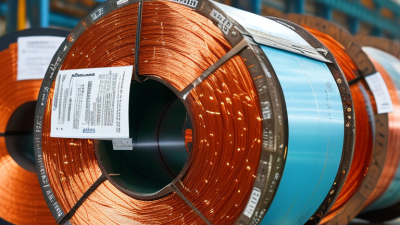
Selecting reliable Electrical Wire manufacturers requires more than comparing factory prices or catalog images. Global buyers must examine conductor quality, insulation consistency, production capacity, testing procedures, and export experience. A polished website proves little. Samples, technical documents, and independent verification matter more.
This guide introduces ten leading Chinese Electrical Wire manufacturers for international sourcing decisions. The selection focuses on practical indicators, including copper or aluminum material control, voltage ratings, flame performance, dimensional accuracy, and batch traceability. It also considers certifications, laboratory capabilities, packaging quality, and communication during pre-shipment inspections. These details become visible when a cable is stripped, bent, measured, and tested under controlled conditions. Small defects can create expensive delays.
Experience still changes the evaluation. A supplier may offer competitive pricing but struggle with custom colors, short delivery windows, or documentation accuracy. Another may have strong engineering support but limited capacity for large projects. No ranking can fit every buyer. That is worth remembering. Product requirements differ across construction, industrial, renewable-energy, and equipment applications. Buyers should confirm applicable standards and local approval requirements before placing an order. Independent technical advice may also be necessary for high-risk installations.
The manufacturers discussed here represent different strengths rather than identical solutions. Some emphasize high-volume production, while others focus on customized wire, flexible conductors, or export-ready services. By comparing evidence instead of promises, purchasing teams can narrow their options with greater confidence. The goal is not merely to find a low quotation. It is to identify a dependable manufacturing partner for safe, consistent, and traceable electrical projects.
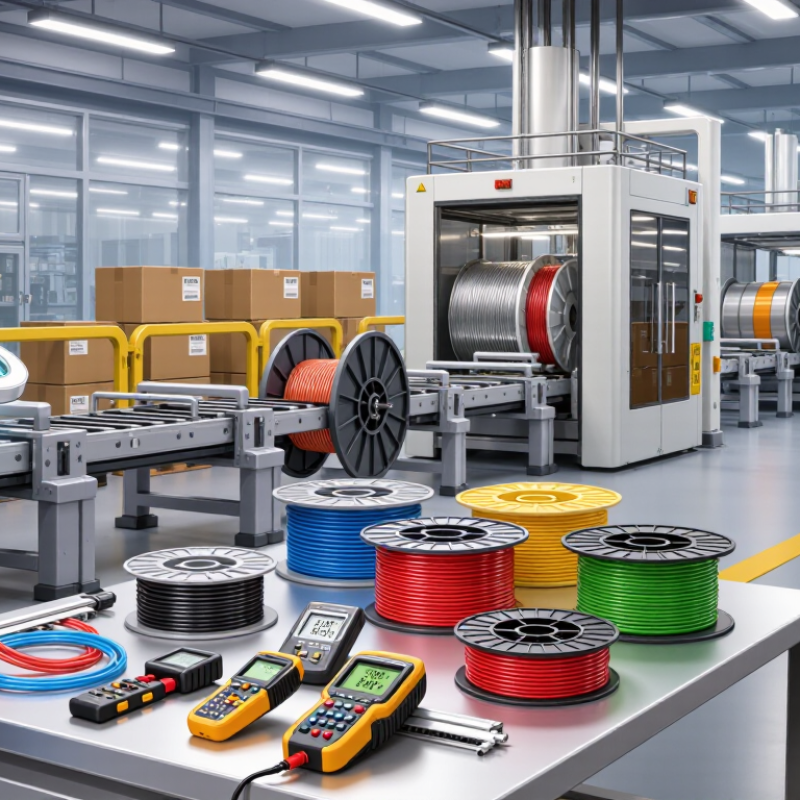
China’s electrical wire industry has become a major link in global power infrastructure. The IEA Electricity 2024 report recorded China’s electricity demand growth at about 6.4% in 2023. That expansion supports demand for power cables, building wires, control cables, and renewable-energy conductors. China also added more than 290 GW of renewable capacity in 2023, according to the National Energy Administration. Every solar field and wind project needs carefully engineered connections.
Scale matters. So does consistency.
UN Comtrade data for HS 8544 shows China ranking among the world’s leading exporters of insulated wire and cable. Its manufacturing base covers copper and aluminum conductors, insulation compounds, shielding, testing, and export packaging. This integrated supply chain can shorten lead times and support customized voltage, temperature, and installation requirements. Global buyers still need evidence, not attractive catalog language. Factory audits, batch traceability, conductor resistance tests, and third-party certification remain practical safeguards.
The industry is not flawless. Price competition can encourage thinner margins and inconsistent quality control. Long-distance shipping may also complicate delivery schedules. The IEA’s growth figures describe market demand, not automatic product reliability. Buyers should compare test reports, relevant IEC requirements, production capacity, and after-sales response before selecting suppliers from China’s top electrical wire manufacturing sector.
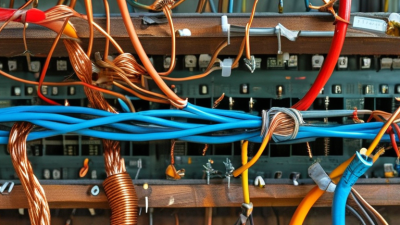
Finding the top electrical wire manufacturers in China requires more than checking a “Top 10” list. Global buyers should examine production experience, engineering capability, and quality control records. A reliable manufacturer can provide clear specifications for conductor material, insulation type, voltage rating, temperature range, and cable size. Ask for recent test reports, factory certificates, and sample inspection records.
Visit the factory when possible. Observe copper drawing, insulation extrusion, printing, coiling, and final packing. Clean floors do not prove quality, but poor process control is a warning sign. Check whether the manufacturer uses calibrated equipment and keeps batch records. Confirm that products meet the standards required in your destination market. Independent laboratory testing is useful, especially for large orders. Samples can look perfect.
Tips: Compare several factories using the same checklist. Request a sample before discussing mass production. Verify conductor resistance, insulation thickness, flexibility, and labeling. Also review delivery history and communication speed. A supplier that avoids technical questions may create problems later.
Experience matters, but it should be measurable. Ask for project references in similar climates, voltage systems, and shipment volumes. Some manufacturers offer low prices because materials or testing are reduced. That saving may become a costly failure. Even experienced buyers can miss small details, such as packaging moisture protection or mixed batch numbers. Recheck them. Reliable cooperation is built through documented specifications, transparent inspections, and realistic promises.
China’s Top 10 Electrical Wire Manufacturers for International Buyers should be judged by evidence, not production claims. The IEA’s Electricity Grids and Secure Energy Transitions report estimates that annual grid investment must rise from about $300 billion to over $600 billion by 2030. This demand increases pressure on cable suppliers to deliver stable quality, accurate documentation, and reliable lead times.
International buyers should examine conductor material, insulation thickness, voltage ratings, and batch test records. Factories serving overseas markets should provide clear compliance evidence for relevant IEC standards, such as IEC 60227 or IEC 60502, when applicable. ISO 9001 certification can support process control, but it is not proof of every product’s performance. Ask for recent third-party test reports, factory audit access, traceability records, and samples from normal production. A polished sample may hide inconsistent bulk output. That risk deserves attention.
Tips: Compare copper resistance, packaging quality, minimum order quantities, and warranty terms. Confirm whether the quoted price includes testing, export packaging, and required documents. Video inspections help, but they cannot replace independent verification. Buyers should also check production capacity during peak seasons. In my experience, communication speed matters almost as much as price. Yet I would not treat fast replies as proof of technical strength. A careful supplier explains limitations, corrects unclear specifications, and records changes before production.
China’s top electrical wire manufacturers are best compared through standards, certifications, and measurable production quality. For general building wires, buyers should check compliance with IEC 60227 or equivalent national standards. Power cables may require IEC 60502, depending on voltage and application. A valid certification should clearly show the product model, rated voltage, factory, testing scope, and expiry date.
Quality comparisons become practical when buyers examine conductor resistance, insulation thickness, voltage performance, and flame behavior. Copper should meet the declared purity and cross-sectional area. A 2.5 mm² cable that measures noticeably smaller deserves investigation. During factory audits, request batch records, calibration certificates, and recent laboratory reports. Inspect cable drums for clear markings, sealed ends, and consistent insulation surfaces. Small details matter.
ISO 9001 supports process control, but it does not prove perfect cable quality. That distinction is often missed. Some certificates cover only selected products, not the entire catalog. Independent samples should be tested before large orders, especially for long-distance projects. Ask whether production follows both Chinese and destination-market requirements. Translation errors can hide important limitations. Even experienced buyers can rely too heavily on certificates and overlook packaging damage, storage humidity, or inconsistent labeling. A reliable comparison combines documents, factory evidence, sample testing, and traceable shipment records.
Anonymous supplier benchmark based on commonly documented Chinese export capabilities, applicable international standards, quality-control practices, and typical product scopes.
| Rank | Supplier Profile | Typical Product Scope | Applicable Product Standards | Common Management and Market Certifications | Typical Quality-Control and Test Coverage | Conductor and Insulation Quality | Typical Export Coverage | Typical Lead Time | Overall Benchmark |
|---|---|---|---|---|---|---|---|---|---|
| 1 | Supplier Profile 01 | Low-voltage building wires, flexible cords, control cables, and power cables up to 1 kV. | IEC 60227 IEC 60502-1 IEC 60332-1-2 | ISO 9001 RoHS REACH CE documentation | Conductor resistance, dimensional inspection, insulation resistance, withstand voltage, aging, tensile and elongation tests, and flame propagation testing. | Class 5 stranded copper options; PVC, XLPE, and low-smoke halogen-free compounds available. | Asia, Europe, the Middle East, Africa, and Latin America. | 20–35 days | 9.2 / 10 |
| 2 | Supplier Profile 02 | Industrial power cables, solar cables, rubber cables, and customized harness assemblies. | IEC 60502-1 IEC 62930 EN 50575 | ISO 9001 RoHS REACH CPR files | Routine electrical tests, UV and weather-resistance checks for photovoltaic cable, insulation adhesion, conductor resistance, and batch traceability. | Tinned or bare copper conductors; cross-linked insulation for improved thermal and environmental performance. | Europe, Australia, Southeast Asia, the Middle East, and North America. | 25–40 days | 9.0 / 10 |
| 3 | Supplier Profile 03 | House wiring, appliance cables, flat cables, speaker cables, and low-voltage flexible cables. | IEC 60227 IEC 60245 IEC 60332 | ISO 9001 RoHS REACH Factory audit support | Spark testing, conductor resistance, insulation thickness, high-voltage testing, flexing tests, and visual control of printing and color coding. | Electrolytic copper and aluminum options; PVC insulation with defined temperature and voltage ratings. | South Asia, Africa, the Middle East, and selected European markets. | 18–30 days | 8.8 / 10 |
| 4 | Supplier Profile 04 | Medium-voltage cables, aerial bundled cables, utility conductors, and armored power cables. | IEC 60502-2 IEC 60228 IEC 60840 | ISO 9001 ISO 14001 RoHS Type-test reports | Partial-discharge testing, AC withstand voltage, conductor resistance, insulation eccentricity, sheath integrity, and mechanical tests. | Compact and stranded conductors; XLPE insulation and metallic screens for utility and industrial applications. | Central Asia, Africa, Southeast Asia, and infrastructure projects in the Middle East. | 35–60 days | 8.7 / 10 |
| 5 | Supplier Profile 05 | Fire-resistant cables, flame-retardant wires, low-smoke halogen-free cables, and emergency system cables. | IEC 60331 IEC 60332 IEC 60754 IEC 61034 | ISO 9001 RoHS REACH Fire-test reports | Flame propagation, circuit integrity under fire, smoke density, halogen-acid gas emission, insulation resistance, and voltage tests. | Copper conductors with mica, XLPE, or halogen-free insulation systems depending on the fire-performance requirement. | Europe, the Middle East, Southeast Asia, and commercial construction markets. | 30–50 days | 8.6 / 10 |
| 6 | Supplier Profile 06 | Automotive wires, battery cables, sensor cables, and specialized equipment wiring. | ISO 6722 ISO 19642 IEC 60228 | ISO 9001 IATF 16949 RoHS REACH | Conductor resistance, voltage withstand, abrasion, flexing, thermal aging, fluid resistance, dimensional control, and terminal crimp verification. | Fine-stranded copper conductors with thin-wall PVC, cross-linked polyolefin, or other automotive-grade insulation. | East Asia, Europe, North America, and automotive component supply chains. | 25–45 days | 8.5 / 10 |
| 7 | Supplier Profile 07 | Instrumentation cables, data cables, communication cables, and shielded control cables. | IEC 61156 IEC 60228 IEC 60332 | ISO 9001 RoHS REACH CPR documentation | Continuity, conductor resistance, impedance, capacitance, attenuation, shielding coverage, insulation resistance, and flame testing. | Solid or stranded copper conductors; PE, PVC, LSZH, and screened constructions for signal integrity. | Europe, Southeast Asia, the Middle East, and industrial automation markets. | 25–45 days | 8.4 / 10 |
| 8 | Supplier Profile 08 | Mining cables, crane cables, welding cables, marine cables, and heavy-duty rubber cables. | IEC 60245 IEC 60092 IEC 60332 | ISO 9001 RoHS REACH Marine test files | Flexing and torsion, abrasion, oil resistance, water resistance, tensile strength, insulation aging, conductor resistance, and voltage testing. | Flexible copper conductors with elastomeric, rubber, or thermoset insulation for demanding operating environments. | Africa, South America, Australia, Southeast Asia, and heavy-industry markets. | 30–55 days | 8.3 / 10 |
| 9 | Supplier Profile 09 | Solar photovoltaic cables, energy-storage cables, battery interconnects, and DC wiring systems. | IEC 62930 EN 50618 IEC 60228 | ISO 9001 RoHS REACH UV test reports | DC resistance, insulation resistance, voltage withstand, thermal aging, UV exposure, ozone resistance, elongation, and water immersion tests. | Tinned copper and flexible class 5 conductors; cross-linked halogen-free insulation for outdoor DC applications. | Europe, Australia, the Middle East, Latin America, and Southeast Asia. | 20–40 days | 8.2 / 10 |
| 10 | Supplier Profile 10 | Custom multi-core cables, machinery cables, appliance wiring, and private-label cable assemblies. | IEC 60227 IEC 60245 IEC 60332 | ISO 9001 RoHS REACH Customer-specific audits | Incoming-material inspection, conductor resistance, insulation thickness, spark testing, continuity, high-voltage testing, and final visual inspection. | Copper or aluminum conductors; PVC, PE, rubber, and halogen-free insulation selected according to application requirements. | Asia, Africa, Europe, the Middle East, and Latin America. | 18–35 days | 8.0 / 10 |
Global buyers should treat Chinese electrical wire purchasing as a verification process, not a price comparison exercise. The IEA Electricity 2024 report expects global electricity demand to increase by more than 2,500 TWh between 2024 and 2026. Demand is expanding. Quality cannot be assumed.
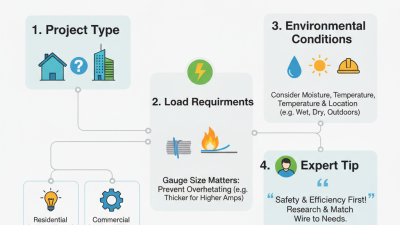
Define the application before contacting suppliers. Confirm conductor material, cross-sectional area, voltage rating, insulation type, temperature range, and installation environment. For building cables, request compliance evidence against relevant IEC standards, such as IEC 60227 or IEC 60502. Ask for conductor resistance, insulation thickness, tensile strength, flame performance, and aging-test results. A clear test report should identify the sample, test method, date, and laboratory. Photos are not enough.
Compare at least three factories using identical specifications. Review production equipment, laboratory controls, batch traceability, and corrective-action records. Use UN Comtrade data under HS 8544 to study China’s cable export patterns and major destination markets. Check whether the quoted copper weight matches the declared conductor size. That detail is often overlooked. Request samples from the actual production line, not a showroom package. Then use an independent laboratory before large-volume purchasing. A low quotation may hide thinner insulation, smaller conductors, or unstable copper quality. No checklist is perfect. Buyers should record every assumption, because one missing detail can affect safety, installation cost, and long-term reliability.
Comparing the voltage ratings of widely used international and Chinese wire standards can help global buyers shortlist suitable products before requesting quotations, certificates, and samples from Chinese manufacturers.
The figures show the highest voltage value stated in each standard’s common rating notation. Final selection should also verify conductor material, cross-sectional area, insulation type, temperature rating, fire performance, testing documents, destination-market approval, and installation conditions. Voltage rating alone does not determine current-carrying capacity.