Who Are the Top Electrical Cable Manufacturers in China?
Choosing among China’s leading cable suppliers takes more than comparing company names. Buyers need to consider product range, manufacturing capability, quality controls, and experience with similar projects. Electrical Cable products can differ in conductor material, insulation, voltage rating, and intended environment. A cable suited to an indoor building may not fit an industrial plant or outdoor installation.
Details matter.
This guide introduces manufacturers that have established a presence in China’s cable industry and explains what buyers should check before making a shortlist. Company scale alone does not prove that a supplier can meet a particular specification. Review technical datasheets, test reports, factory information, and relevant project references. Where applicable, confirm certifications directly and check that they match the exact product being purchased. Standards and documentation can vary by market.
There is no single ranking that suits every buyer. Public information may be incomplete, and product portfolios change over time. That deserves a second look. The companies discussed should therefore be treated as candidates for further evaluation, not as an automatic endorsement. Compare their manufacturing focus, communication, delivery capabilities, and after-sales support against your project’s needs. A clear specification—and careful verification—can make the search more reliable.
Overview of China’s Electrical Cable Manufacturing Industry
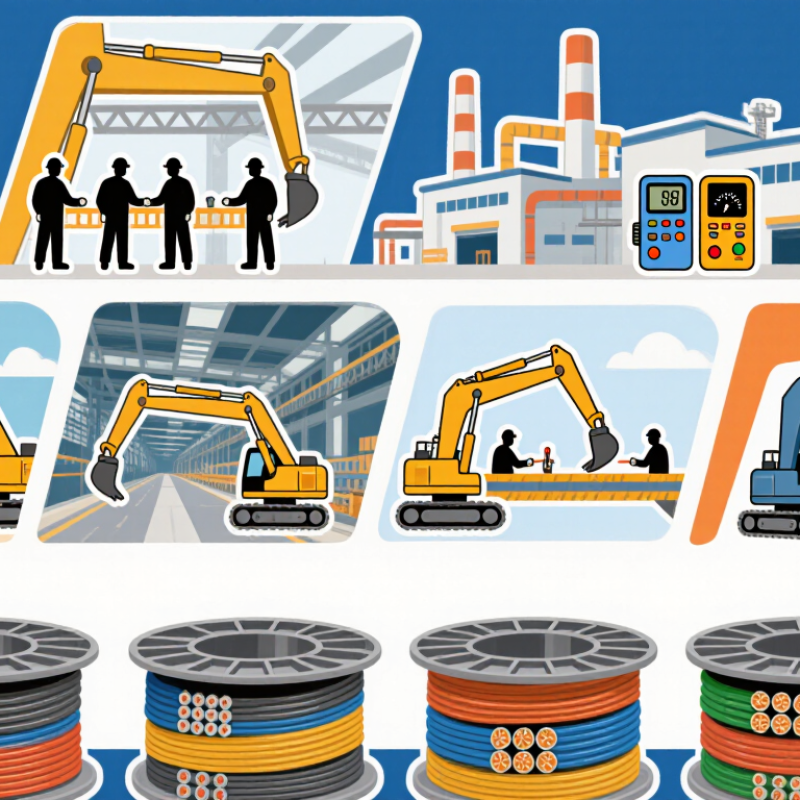
China’s electrical cable industry serves power networks, construction, transport, industrial equipment, and communications infrastructure. Manufacturers produce everything from building wires to high-voltage transmission cables. Production often involves drawing copper or aluminum into conductors, stranding the wires, applying insulation, and adding protective sheaths. Each stage affects conductivity, flexibility, and durability.
The sector benefits from established materials supply chains and large-scale production capacity. Factories may operate extrusion lines, stranding machines, and testing equipment under one roof. Samples are commonly checked for conductor resistance, insulation thickness, and voltage performance. Small defects matter. A thin spot in insulation can weaken a cable, even when its outer surface looks sound.
Quality can still vary between products and suppliers. Specifications, test reports, and traceability records deserve careful review, especially for projects with demanding operating conditions. A certificate alone does not show how consistently a factory controls production. That is easy to overlook. Buyers should also clarify the intended voltage, installation environment, temperature range, and expected service life. China’s manufacturing base is broad, but choosing a suitable cable depends on evidence, not output volume alone.
China’s Electrical Cable Manufacturing Industry: 2023 Power Capacity Additions
New power-generation capacity additions in China, by source (GW)
Rapid growth in solar and wind capacity creates demand for grid connections and related power infrastructure, including electrical cables. These figures show capacity additions, not cable production or sales.
Source: China National Energy Administration (NEA), 2023 power-industry statistics. Values are in gigawatts (GW).
Criteria for Identifying Leading Cable Manufacturers
Criteria for Identifying Leading Cable Manufacturers
A strong cable manufacturer should show more than a polished catalogue. Look for clear records of production capacity, quality checks, and material traceability. Can the supplier identify a cable batch from its raw materials through final testing? Ask for sample test reports, and check that the listed tests match the cable type and intended use. Numbers can mislead. A large factory is not automatically a reliable one.
Technical capability matters, too. Review conductor sizes, insulation options, temperature ratings, and the ability to make products to stated specifications. Visit the facility when practical; observe how workers label reels, store materials, and handle inspection equipment. Ask how defects are recorded and resolved.
Ask for evidence. Independent certifications can support an assessment, but verify their scope and validity rather than relying on a logo in a brochure. Delivery history, engineering response times, and references from comparable projects also help reveal day-to-day reliability. No scorecard is perfect. Supplier data may be incomplete, and a short audit can miss issues, so compare several sources before deciding.
Major Electrical Cable Manufacturers in China
China’s major electrical cable manufacturers serve power utilities, renewable projects, rail networks, buildings, and industrial sites. Their capabilities differ: some focus on high-voltage transmission, while others produce low-voltage building wire or specialist cables. The China Electricity Council reported that national installed power-generation capacity reached 2.92 billion kW in 2023, an increase of 13.9% year on year. That expansion supports demand for reliable cable systems, but capacity alone does not prove a supplier’s quality.
Compare manufacturers by voltage range, conductor materials, insulation performance, testing facilities, and delivery records. The International Energy Agency’s 2023 report, Electricity Grids and Secure Energy Transitions, says annual global grid investment must rise above US$600 billion by 2030. This points to growing demand for grid upgrades and dependable supply chains. Request test certificates and project references, then check whether the specifications match the installation environment. A polished catalogue is not enough.
Tips: Confirm cable ratings, temperature limits, and test methods before ordering. Ask how samples are traceable to production batches. Small details matter. A specification can look complete and still leave practical questions unanswered.
Key Cable Products and Their Applications
China’s cable manufacturers supply products for very different jobs. High-voltage and extra-high-voltage power cables carry electricity across long distances, while medium-voltage cables connect substations to local distribution networks. For offshore wind projects, engineers may specify subsea cables with water-resistant insulation and protective metal layers. Installation depth, seabed conditions, and repair access all matter. Details matter.
Low-voltage cables serve buildings, lighting systems, and equipment; control and instrumentation cables transmit signals in factories and power plants. Fiber-optic cables carry data for telecom networks and data centers, where heat, cable routing, and signal reliability shape product choice. These categories are not interchangeable. A cable that suits a dry indoor panel may fail in a damp outdoor run.
Demand is also tied to grid upgrades and electrification. The International Energy Agency’s 2023 report, Electricity Grids and Secure Energy Transitions, says annual grid investment needs to rise from about $300 billion to more than $600 billion by 2030. Its Global EV Outlook 2024 reports nearly 14 million electric cars sold in 2023, supporting demand for vehicle high-voltage wiring and charging cables. Still, sales figures do not tell buyers which cable fits a site. Voltage, current, temperature, and installation conditions need checking against project specifications.
Industry Trends Shaping China’s Cable Market
China’s cable market is being reshaped by grid upgrades, renewable energy projects, electric vehicles, and expanding data centers. These uses place different demands on insulation, voltage ratings, heat resistance, and service life. A cable beside a coastal wind installation, for example, faces moisture and salt exposure that an indoor data-center cable may not. Details matter.
Grid investment is encouraging demand for high-voltage and underground transmission cables. Meanwhile, charging networks and solar installations need reliable cables that tolerate repeated use and changing temperatures. Manufacturers are also adopting more automated production and inspection, including checks for conductor dimensions and insulation defects. Better process control helps, but it does not replace independent testing or clear traceability. Materials are changing, too. Copper price swings have renewed interest in aluminum conductors, though the right choice depends on installation conditions and engineering requirements. There is no universal answer. Environmental expectations are pushing interest in recyclable materials and lower-smoke insulation. Yet performance claims can be difficult to compare without consistent test data. Buyers should examine documented specifications, test results, and operating conditions rather than rely on broad promises. One point deserves more attention: rapid market growth can make quality differences harder to spot, especially when purchasing decisions focus too narrowly on price.