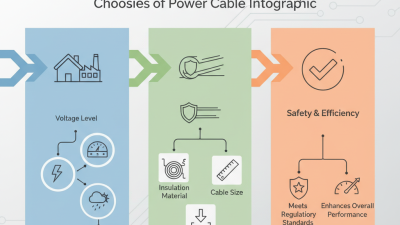
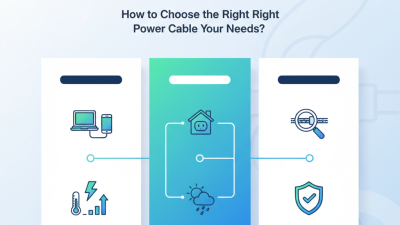
A Power Cable carries electrical energy from a source to equipment, appliances, machinery, or a distribution system. Its job sounds simple, but cable selection rarely is. Conductor material, insulation, voltage rating, current capacity, flexibility, and installation conditions all affect performance and safety. A cable running behind a desk faces different demands from one buried underground or exposed to sunlight.
This guide explains how Power Cable designs differ and where each type works best. Copper conductors usually provide excellent conductivity and flexibility. Aluminum can reduce weight and cost, although it requires careful termination and suitable connectors. PVC insulation suits many indoor applications, while XLPE and other advanced materials often handle greater heat or demanding environments. Outdoor cables may also need resistance to moisture, ultraviolet radiation, abrasion, and temperature changes.
The best choice depends on the complete installation, not marketing language alone. A thick cable is not automatically safer, and a cheaper option may create heat, voltage drop, or premature failure. It matters. Cable length, load demand, routing space, ambient temperature, and local electrical standards must be checked by a qualified professional. Manufacturer specifications should guide the final decision.
There is no universal “best” Power Cable. A workshop, data center, construction site, and household may need completely different solutions. Even a careful selection can require review after conditions change. This article offers practical comparisons, but real installations deserve measured calculations and professional judgment. Perhaps that is the part many quick guides overlook.
A power cable is an insulated conductor that carries electrical energy from a source to equipment. Its structure usually includes a metal conductor, insulation, shielding, and an outer jacket. Copper conducts efficiently and bends easily, while aluminum weighs less and often costs less. The conductor may be solid or stranded. Stranded cable handles movement better.
The insulation separates live electricity from people, tools, and nearby conductors. Common materials resist heat, moisture, oil, or mechanical stress differently. A shield can reduce electromagnetic interference, especially around sensitive control equipment. The outer jacket adds protection against abrasion and sunlight. Small details matter.
Power cables also provide grounding and stable current delivery. In practice, cable selection depends on voltage, current, distance, installation method, and environmental conditions. A cable running inside a dry cabinet needs different protection from one buried outdoors. The “best” type is not universal. It must match the application.
For short, flexible connections, a stranded cable is often practical. Fixed installations may require a more rigid construction. Longer runs need attention to voltage drop, because undersized conductors can waste energy and generate heat. I have seen specifications fail when temperature correction was ignored. That mistake is easy to repeat. Check the conductor size, insulation rating, bend radius, and local electrical requirements before installation. A qualified professional should verify critical systems.
A power cable carries electrical energy from a source to equipment, buildings, or distribution systems. Its classification begins with voltage. Low-voltage cables commonly serve homes, lighting, and control panels. Medium-voltage cables support industrial feeders and local distribution. High-voltage cables require carefully designed insulation, shielding, clearances, and jointing procedures. The exact limits vary by regional standards, so a label alone should not guide installation.
Conductors are usually copper or aluminum. Copper offers high conductivity and flexible handling, while aluminum reduces weight and material cost. Conductors may be solid or stranded. Solid conductors suit fixed wiring, but stranded conductors bend more easily around corners. In field work, installers also check cross-sectional area, allowable current, voltage drop, and short-circuit performance. A cable that fits physically may still be electrically unsuitable.
Insulation controls leakage and protects against heat, moisture, and mechanical stress. PVC is common for general-purpose applications. XLPE tolerates higher operating temperatures and often serves distribution systems. Rubber-based insulation remains useful where flexibility, vibration resistance, or outdoor exposure matters. The jacket also deserves attention. It may resist sunlight, oil, abrasion, or water. Not every thick cable is safer. I have seen selection decisions focus on appearance while ignoring bend radius and ambient temperature. That mistake can shorten service life. Installation conditions, testing records, and recognized safety standards should influence the final choice.
What Is a Power Cable and Which Type Is Best?
A power cable carries electrical energy between equipment, panels, and distribution points. Its best type depends on voltage, current, installation method, temperature, and mechanical exposure. A cable in a dry conduit faces different demands from one buried beneath a wet driveway.
IEC 60502 provides construction and test requirements for power cables with extruded insulation. The applicable section depends on the rated voltage. It addresses details such as conductor materials, insulation, sheathing, voltage tests, and marking. Selection should match the cable’s operating voltage, conductor size, insulation temperature, and environmental conditions. A thicker cable is not automatically safer.
NEC ampacity rules approach selection through allowable current. The calculation considers conductor material, insulation rating, ambient temperature, installation conditions, and the number of current-carrying conductors. Correction and adjustment factors may reduce the usable ampacity. Termination temperature ratings also matter, especially when equipment limits the permitted conductor temperature. Check the adopted local edition.
Field experience shows that installation details often change the answer. A tightly packed raceway can retain heat. Direct sunlight can raise cable temperature. Long runs may require voltage-drop review, even when ampacity appears adequate. The calculation may look complete, yet one missing derating factor can create risk. I have found that clear records, measured routing distances, and a second technical review prevent many avoidable errors. When doubt remains, consult a qualified electrical professional and verify the governing requirements.
How to read the chart: The values show the allowable ampacity of copper conductors from NEC Table 310.16 under typical reference conditions: 75°C conductor terminations, no more than three current-carrying conductors in a raceway or cable, and 30°C ambient temperature.
IEC 60502-1: This standard covers power cables with extruded insulation for fixed installations, commonly including the 0.6/1 kV (1.2 kV maximum system voltage) class. It does not provide one universal ampacity value for every installation. Cable selection must also consider conductor size, insulation temperature rating, installation method, ambient temperature, grouping, voltage drop, short-circuit withstand, and local regulations.
Important: NEC ampacity must be adjusted when installation conditions differ from the reference conditions. Small-conductor overcurrent-protection limits and equipment termination ratings may also restrict the final conductor selection.
Reference basis: NEC Table 310.16 and IEC 60502-1 voltage-designation and construction requirements. Values are for technical comparison and are not a substitute for project-specific code calculations.
What Is a Power Cable and Which Type Is Best?
A power cable carries electrical energy from a source to equipment, buildings, or industrial systems. Its performance depends heavily on the conductor and insulation materials. Copper offers excellent conductivity and flexible handling during installation. It also resists oxidation better than aluminum at exposed connections. However, copper is heavier and usually costs more.
Aluminum provides a lighter alternative for long cable runs and large electrical networks. Its lower conductivity requires a larger conductor for the same current capacity. Installers must prepare aluminum connections carefully because thermal expansion can loosen poorly fitted terminals. I once underestimated this detail during a workshop inspection. The connection looked secure. Heat marks later showed otherwise.
XLPE insulation tolerates higher operating temperatures than many conventional materials. It performs well in underground routes, high-load systems, and areas with changing temperatures. PVC insulation is often easier to process and can suit ordinary indoor wiring. Yet PVC generally has lower temperature resistance than XLPE. Cable selection should match load, voltage, moisture, bending, and installation space. A flexible copper cable may suit machinery, while aluminum can reduce weight across a fixed route. Material data alone cannot predict every field result. Actual installation quality matters just as much.
| Performance Dimension | Copper Conductor | Aluminum Conductor | XLPE Insulation | PVC Insulation |
|---|---|---|---|---|
| Primary Function | Carries electrical current with low electrical resistance. | carries electrical current at a lower weight and generally lower material cost than copper. | Provides electrical insulation around the conductor and separates energized parts from the environment. | Provides electrical insulation, mechanical protection, and resistance to moisture and many common chemicals. |
| Electrical Conductivity | Approximately 100% IACS for annealed copper at 20°C; high conductivity allows a smaller conductor for a given current. | Approximately 61% IACS for electrical-grade aluminum at 20°C; a larger cross-sectional area is usually required to match copper resistance. | Does not carry the load current. Its electrical performance depends on insulation thickness, cleanliness, manufacturing quality, and voltage rating. | Does not carry the load current. Its dielectric performance is suitable for many low- and medium-voltage cable designs when correctly specified. |
| Weight and Installation | High density, approximately 8.96 g/cm³. Heavier cable can increase handling and installation effort. | Low density, approximately 2.70 g/cm³. Aluminum conductors can substantially reduce cable weight, especially in larger sizes. | Usually allows a compact design because its higher continuous operating temperature can support greater current capacity under comparable conditions. | Often provides a cost-effective design, but its lower conductor operating-temperature limit can require a larger cable or reduced load in some applications. |
| Resistance and Voltage Drop | Lower resistance per unit cross-sectional area generally produces lower voltage drop and lower I²R losses. | Higher resistance per unit area means the conductor should be correctly sized to control voltage drop and heat generation. | Insulation does not directly determine conductor resistance, but its temperature capability affects the allowable continuous current. | Insulation does not directly determine conductor resistance, but its lower temperature rating may limit allowable current and increase conductor-size requirements. |
| Typical Continuous Conductor Temperature | Determined by the insulation system and cable standard, not by copper alone. | Determined by the insulation system, joint design, and cable standard, not by aluminum alone. | Common rating: 90°C maximum continuous conductor temperature for many power-cable constructions. | Common rating: 70°C maximum continuous conductor temperature for many power-cable constructions. |
| Short-Circuit Temperature Capability | Conductor and connector performance depend on the cable design; copper generally has good thermal and mechanical performance. | Requires careful consideration of thermal expansion, connector compatibility, and joint temperature during fault conditions. | Many designs permit a short-circuit conductor temperature of approximately 250°C for a limited duration, subject to the applicable standard. | Many designs permit a short-circuit conductor temperature of approximately 160°C for a limited duration, subject to the applicable standard. |
| Mechanical Strength and Flexibility | Good ductility and reliable termination characteristics; suitable for compact and frequently handled cables. | Lightweight but more prone to surface oxidation and creep at connections; compatible lugs, joint compounds, and correct torque are important. | Good resistance to thermal deformation and suitable for fixed installations; flexibility depends on the complete cable construction. | Generally flexible and easy to process; flexibility varies with formulation, temperature, conductor class, and cable design. |
| Moisture and Chemical Resistance | Copper itself conducts well in damp environments, but moisture and corrosive conditions can affect joints and exposed surfaces. | Requires suitable terminations and protection in environments where oxidation or galvanic corrosion may occur, especially near dissimilar metals. | Good resistance to moisture and many chemicals; exact performance depends on the compound and sheath system. | Good general resistance to water, oils, acids, and alkalis, although performance varies by formulation and chemical concentration. |
| Fire and Smoke Considerations | Non-combustible conductor; fire behavior is primarily determined by the insulation, sheath, and installation environment. | Non-combustible conductor; fire behavior is primarily determined by the insulation, sheath, and installation environment. | Halogen-free XLPE compounds may be available, but standard XLPE should not automatically be considered low-smoke or flame-retardant. | Can release hydrogen chloride and smoke when exposed to fire; low-smoke, flame-retardant, or low-halogen formulations must be specified when required. |
| Common Applications | Building wiring, control panels, industrial equipment, flexible power cords, and installations where compact size or frequent termination is important. | Large fixed feeders, overhead lines, utility distribution, and installations where lower weight and material economy are priorities. | Medium-voltage distribution, industrial feeders, underground power systems, and circuits requiring a higher continuous operating temperature. | Building wiring, general-purpose low-voltage cables, control cables, and installations where cost efficiency and general-purpose protection are priorities. |
| Main Advantages | High conductivity, compact size, good ductility, and generally straightforward termination. | Low weight, lower density, and favorable economics for large conductor sizes. | Higher continuous temperature rating, good moisture resistance, and lower dielectric losses than many conventional insulation materials. | Cost effectiveness, broad availability, good general-purpose protection, and convenient processing. |
| Main Limitations | Higher mass and material cost compared with aluminum for equivalent current-carrying applications. | Requires larger cross-sectional area and careful attention to termination, oxidation, creep, and thermal expansion. | Usually costs more than standard PVC and may require a compatible sheath or fire-performance system for special environments. | Lower common continuous temperature rating than XLPE and potentially higher smoke and corrosive-gas emissions during fire. |
| Best Choice When | Space is limited, voltage drop must be minimized, or frequent installation and termination work is expected. | Low weight, long transmission distances, or large conductor sizes are important and qualified aluminum terminations are available. | Higher ampacity, elevated operating temperatures, underground service, or long-term thermal performance is required. | General-purpose low-voltage service, moderate operating temperatures, and an economical insulation system are suitable. |
Note: Actual ampacity, voltage rating, allowable voltage drop, fire performance, and service life depend on conductor size, installation method, ambient temperature, grouping, shielding, sheath design, applicable standards, and termination quality. XLPE and PVC temperature values shown are common reference ratings and must be verified against the specific cable standard and construction.
A power cable transfers electrical energy from a source to equipment. Its best type depends on safety, load capacity, and voltage drop. Flexible stranded cables suit moving tools and temporary connections. Solid-core cables work well in fixed installations. However, flexibility alone does not make a cable safe. The conductor size, insulation rating, and installation environment matter more.
Check the equipment’s current demand before choosing a cable. A cable carrying excessive current can overheat inside walls or under insulation. Confirm its rated ampacity, grounding arrangement, and temperature limit. Moisture, sunlight, chemicals, and mechanical pressure also affect cable selection. Cables installed outdoors need suitable protection. A neat installation is not automatically a safe one.
Voltage drop becomes noticeable on long cable runs. Lights may dim, motors may start poorly, and sensitive equipment may behave unpredictably. A larger conductor usually reduces resistance and voltage loss. Keeping the run short helps too. Many designs use a three percent voltage-drop target, but local requirements may differ.
A simple rule can mislead. I have seen cable choices based only on appliance wattage, ignoring startup current and cable length. That shortcut needs reconsideration. For critical circuits, calculate the expected load, measure the route, and obtain review from a qualified electrician before installation.